Three centuries of innkeeping on West Main Street.
An American story, told from one corner.
There has been an inn on this corner since 1743 — before Clinton was Clinton,
before New Jersey was a state, back when this stretch of Hunterdon County was
farmland and a river crossing and not much else.
What the inn provided then is roughly what we provide now: a hot meal, a glass
of something good, and a place to stop. The building has grown in every
direction since — a wing here, a porch there, three stories where there were
two — and the rooms upstairs have long since become dining rooms. But the
address hasn’t moved, the front door is in the same wall, and the Tap Room
is still called the Tap Room.
1743
The inn opens.
An inn is established on this corner, on the road carrying wagon traffic between the Delaware River and the farms of central Jersey. Hunterdon County is barely settled. The village here is called Hunt’s Mills, after the family whose mill stands on the South Branch of the Raritan.
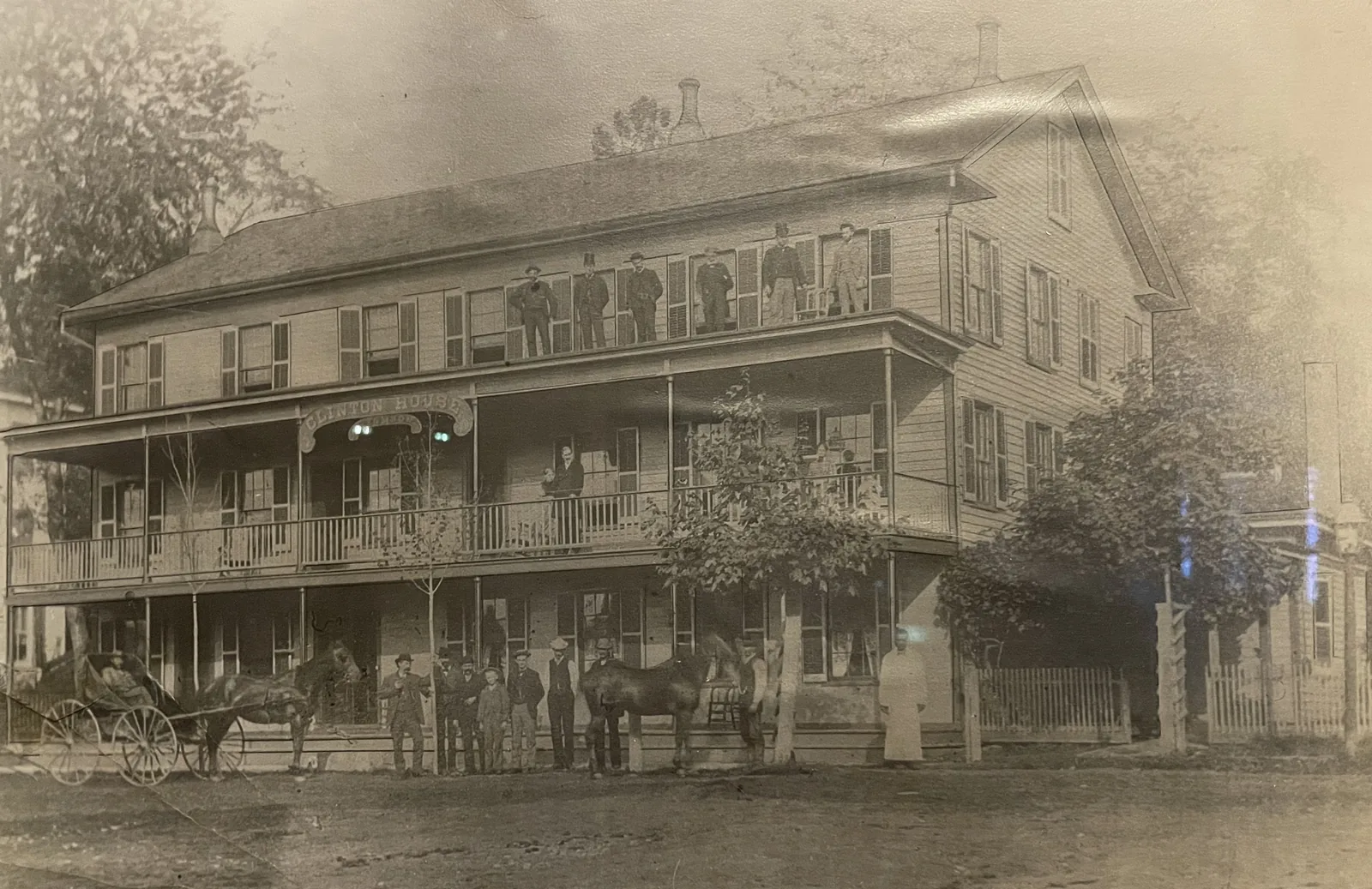
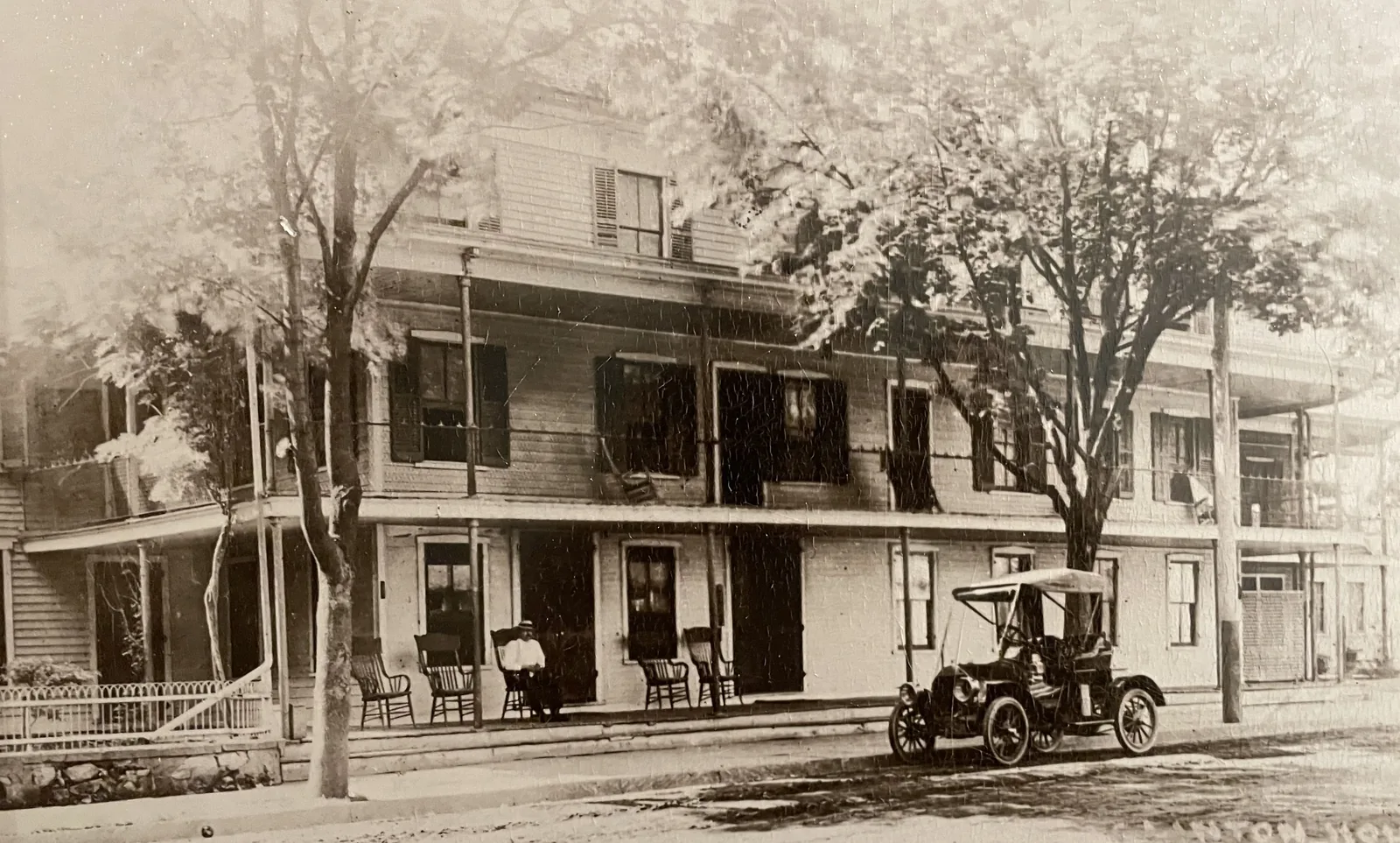
Before the later additions — two stories and a wraparound porch.c. 1816
The turnpike arrives.
The old colonial highway past the mills is formalized as the New Jersey Turnpike, the chartered road between New Brunswick and Easton. That road is the street outside our front door — West Main Street is the turnpike. For the next half-century, everything moving between the Delaware and the coast comes past this porch.
1828
The town takes its name.
John W. Bray and the Taylor family — the developers remaking the village — persuade Hunt’s Mills to rename itself Clinton, after Governor DeWitt Clinton of New York, who had died that February. The same partnership rebuilds and enlarges the tavern here. The post office opens under the new name the following year.
Staff and guests on both levels of the porch, a carriage waiting out front.1881
The railroad comes to the door.
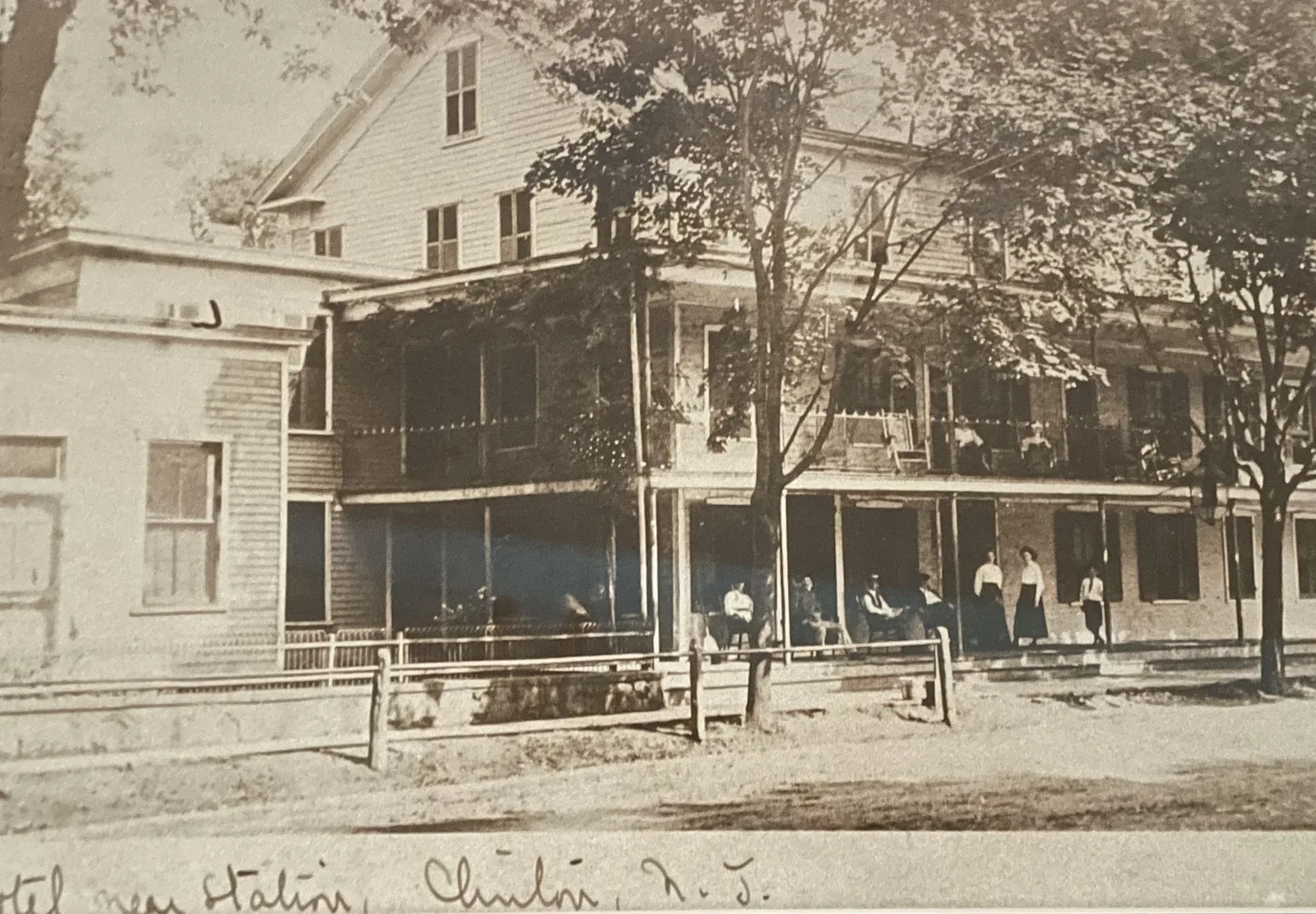
The Lehigh Valley Railroad runs a branch line to the very edge of West Main Street — directly into the yard that had always served the Clinton House. Before this, a coach carried our guests several miles to the station at Annandale. Now travelling actors, salesmen and city families escaping the summer heat step off the train and walk across the road.
Captioned by hand on the print itself: “Hotel near Station, Clinton, N.J.”c. 1900
The Music Hall years.
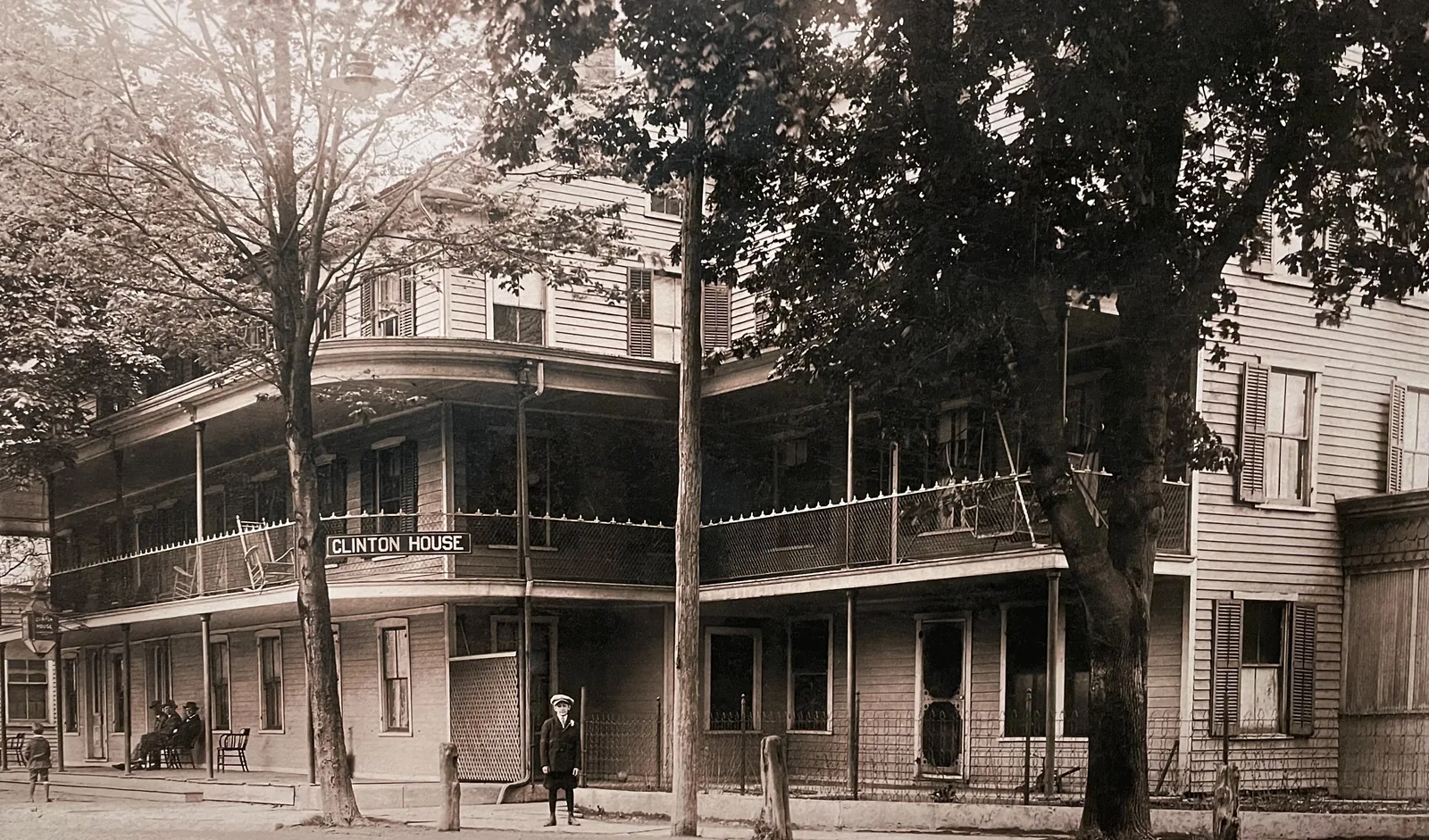
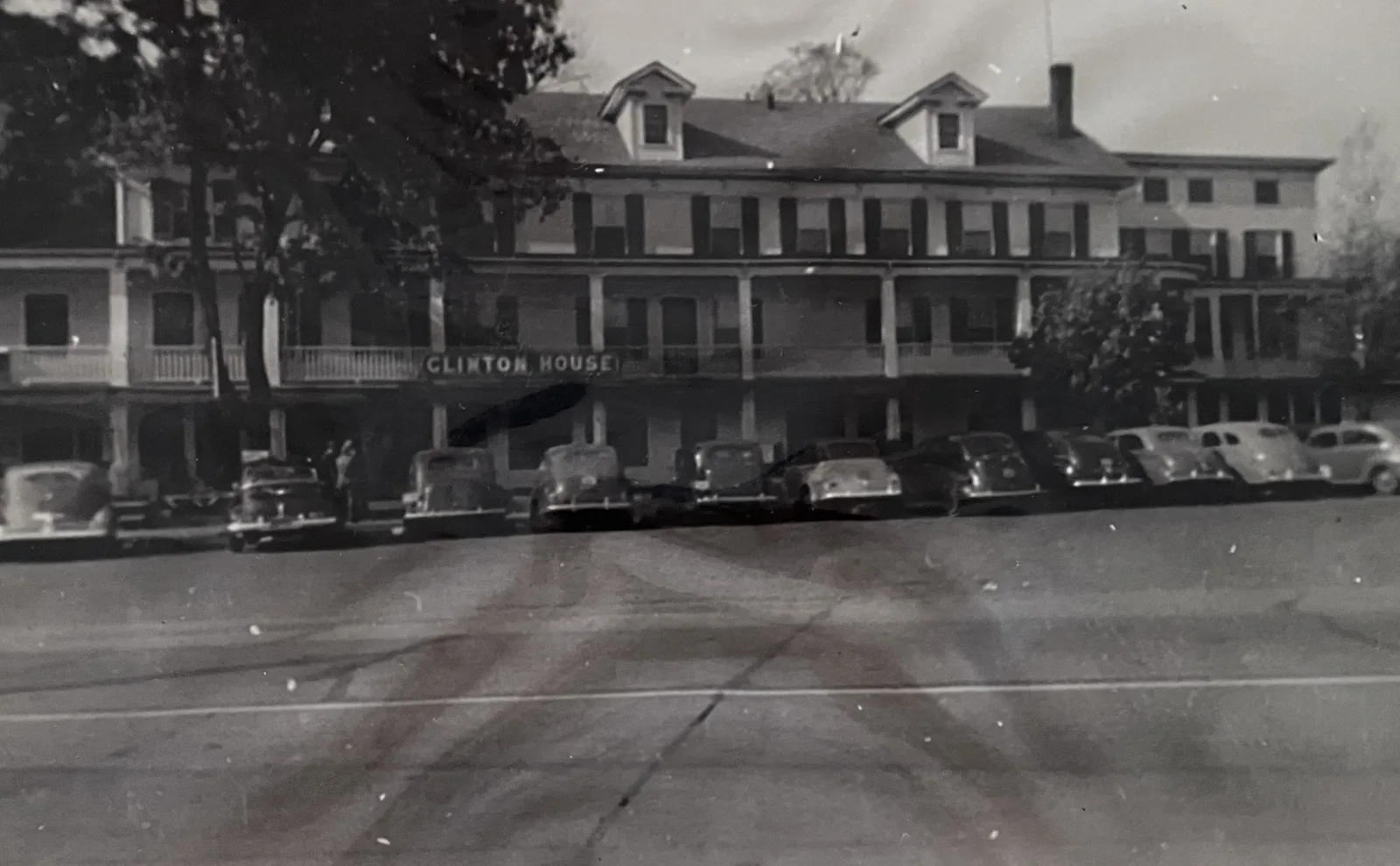
The Music Hall opens up the street and the Clinton House fills most nights with its audiences. Photographs from around 1900 show the hotel grown to nearly its present size, the long portico and the balcony above it already in place.
Grown to nearly its present size.1930s
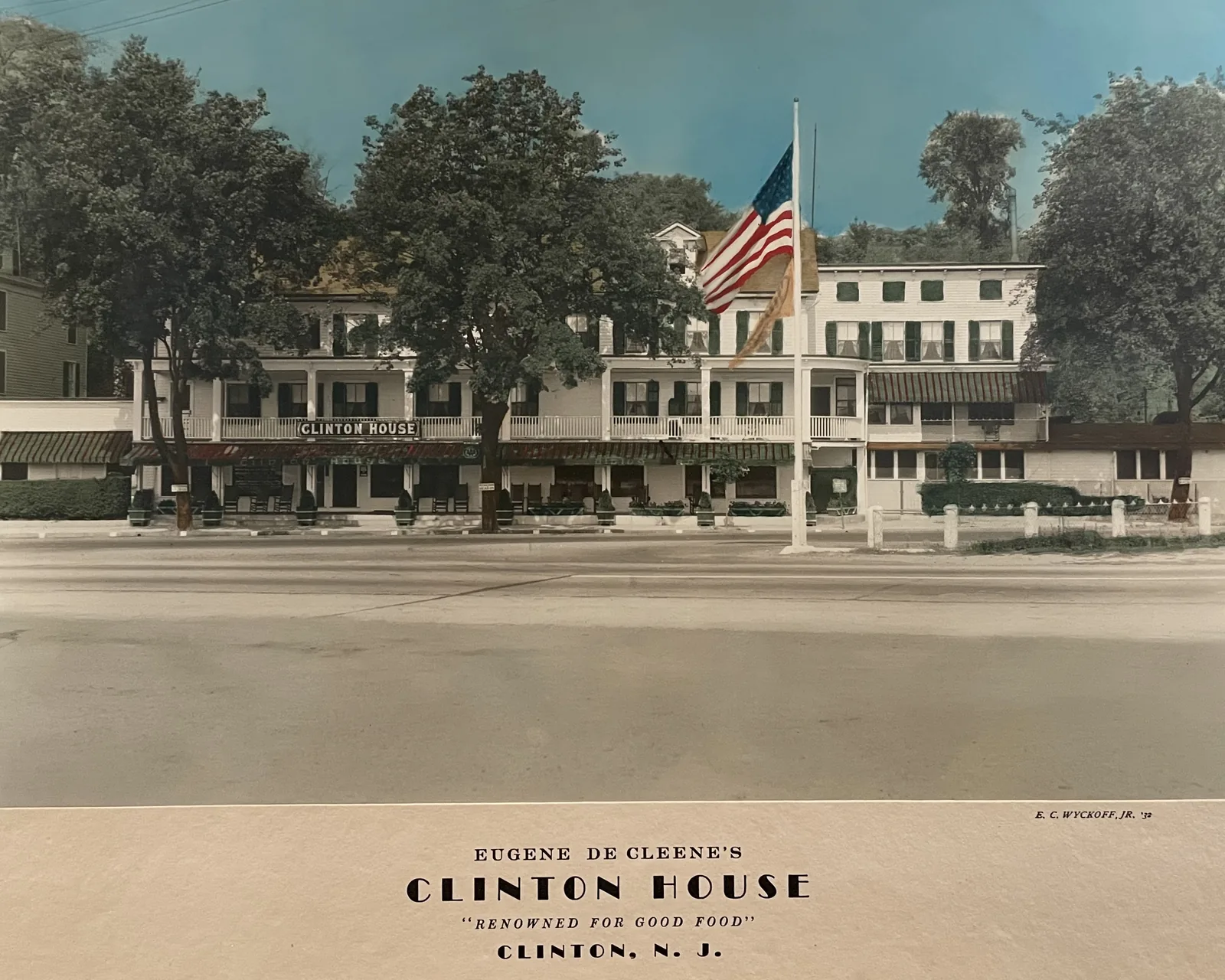
“Renowned for good food.”
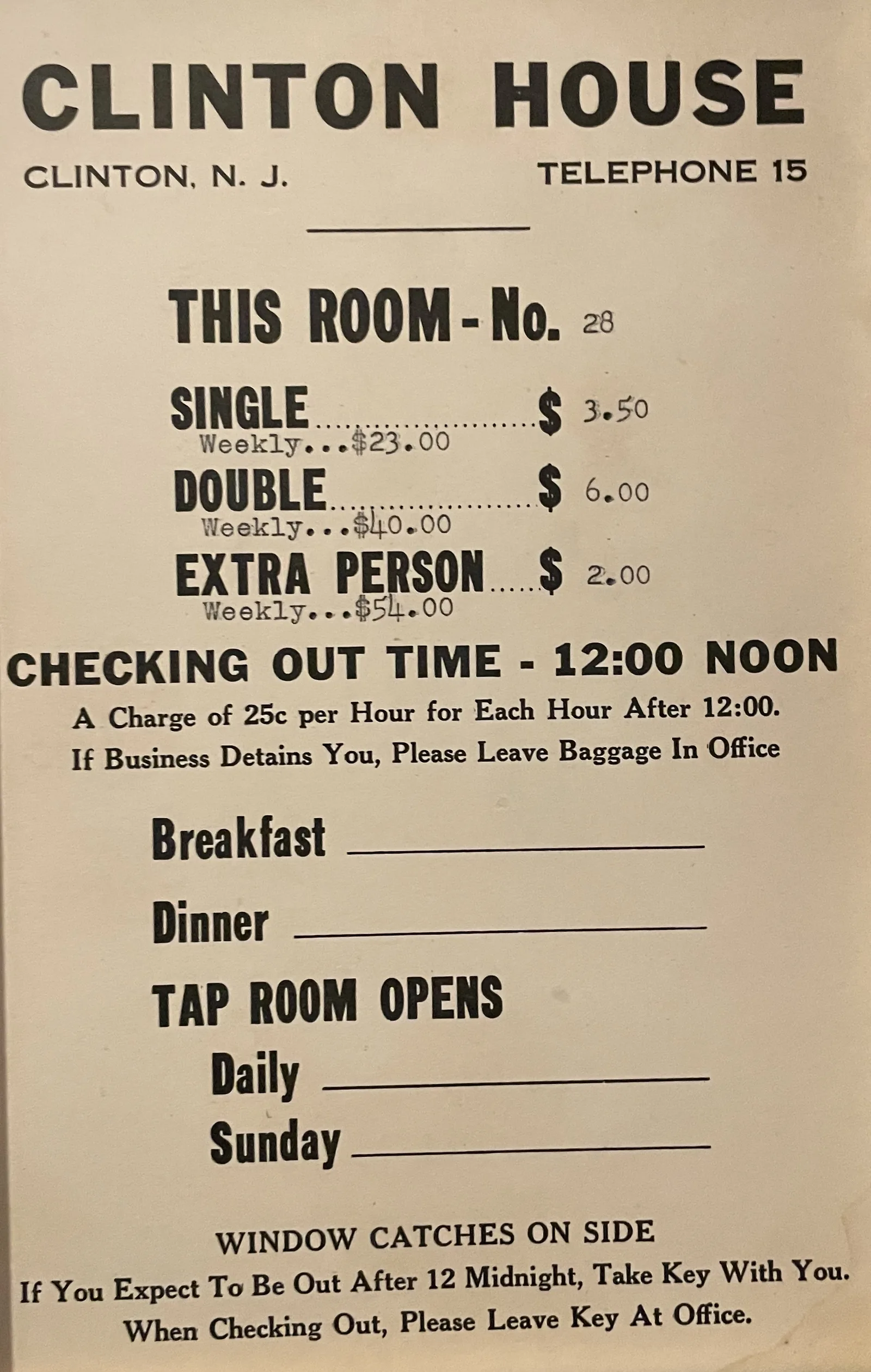
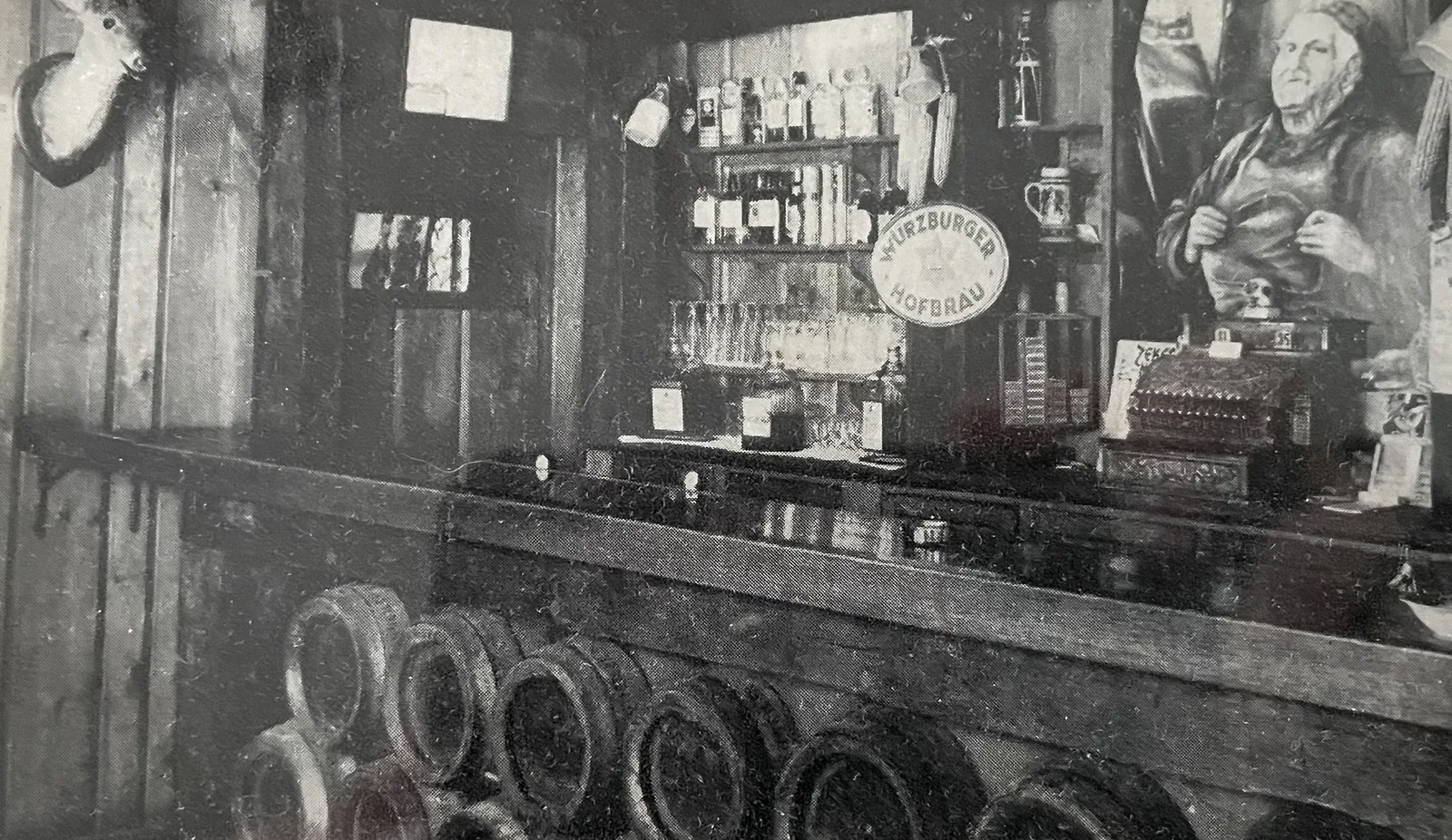
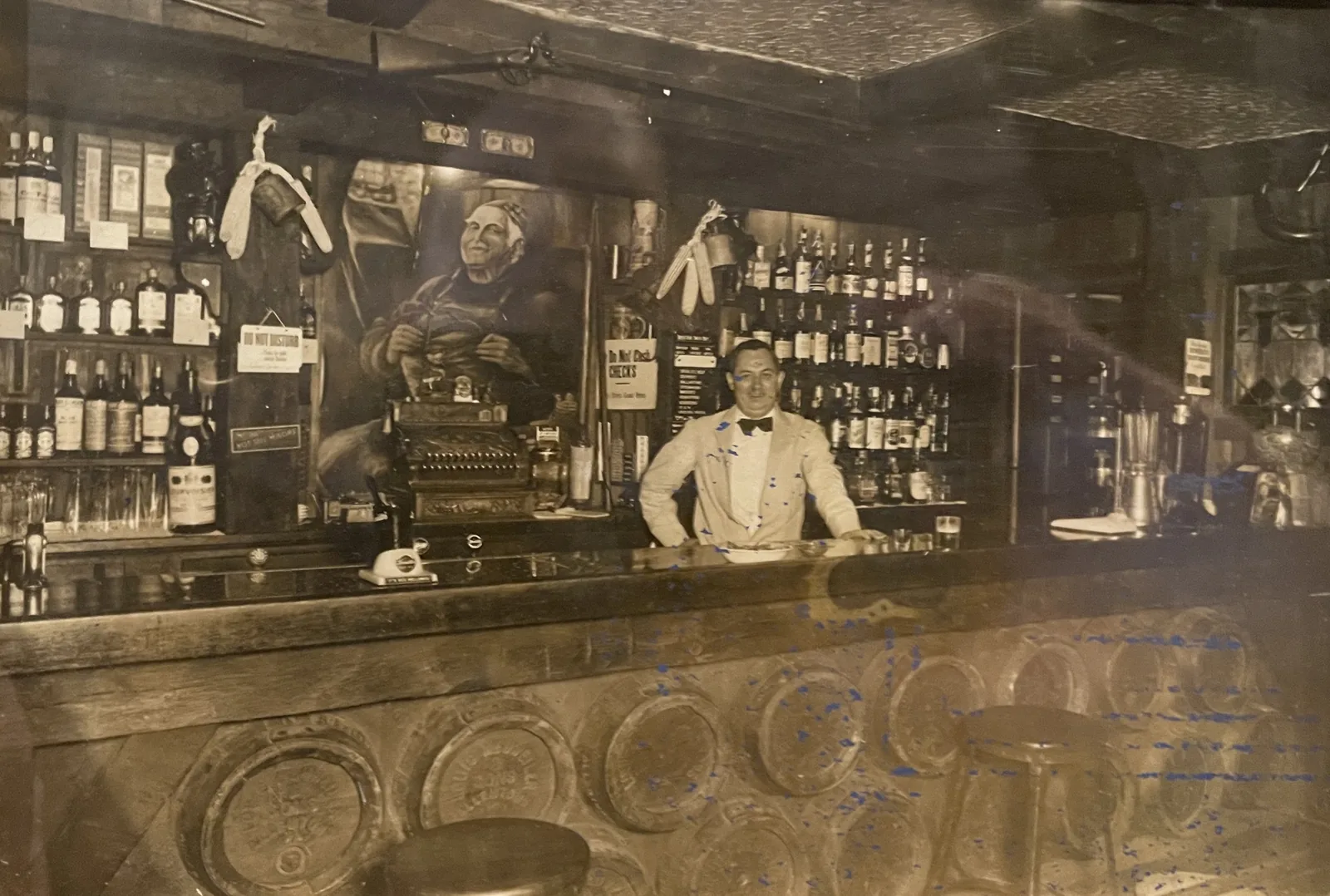
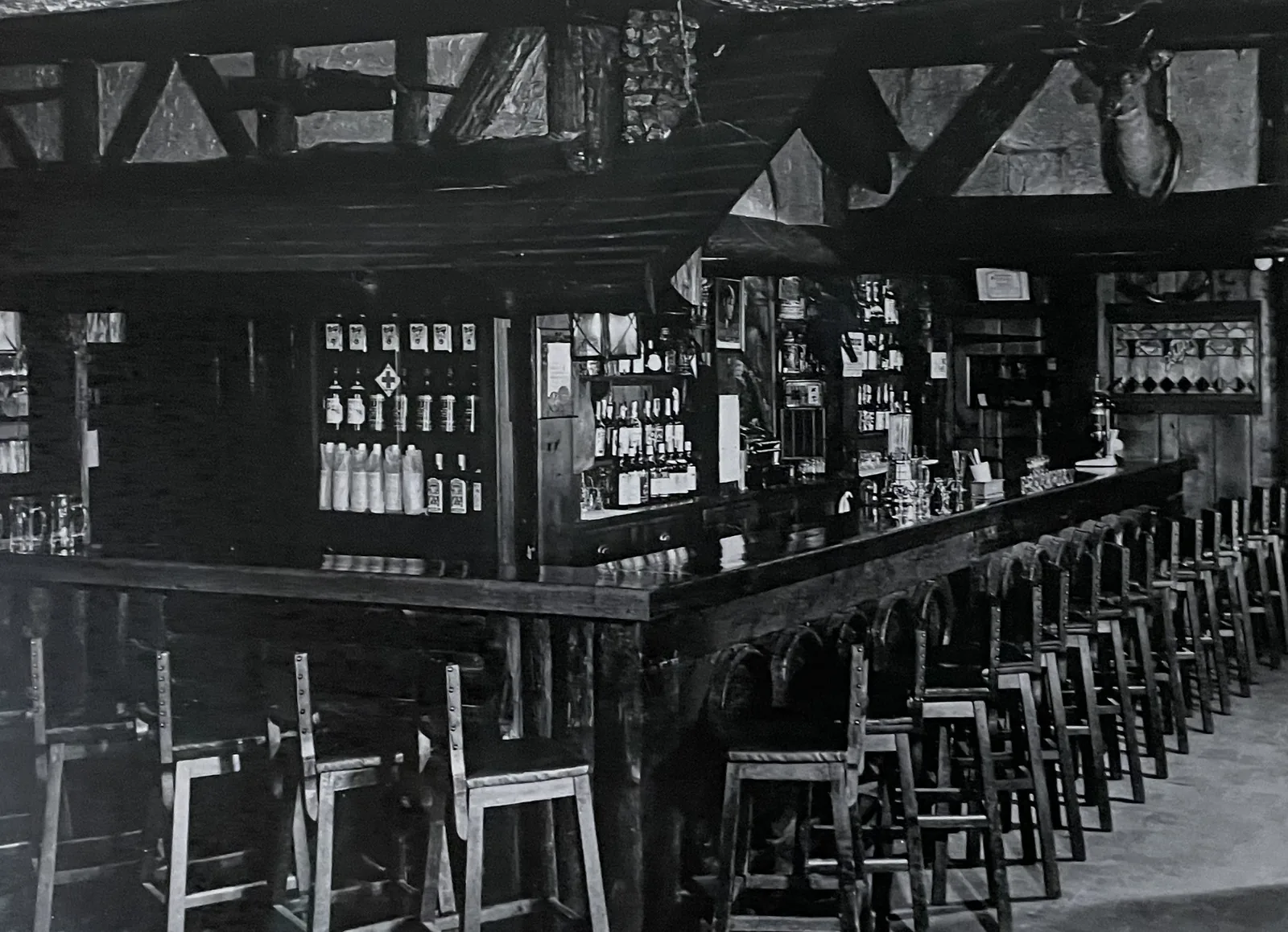
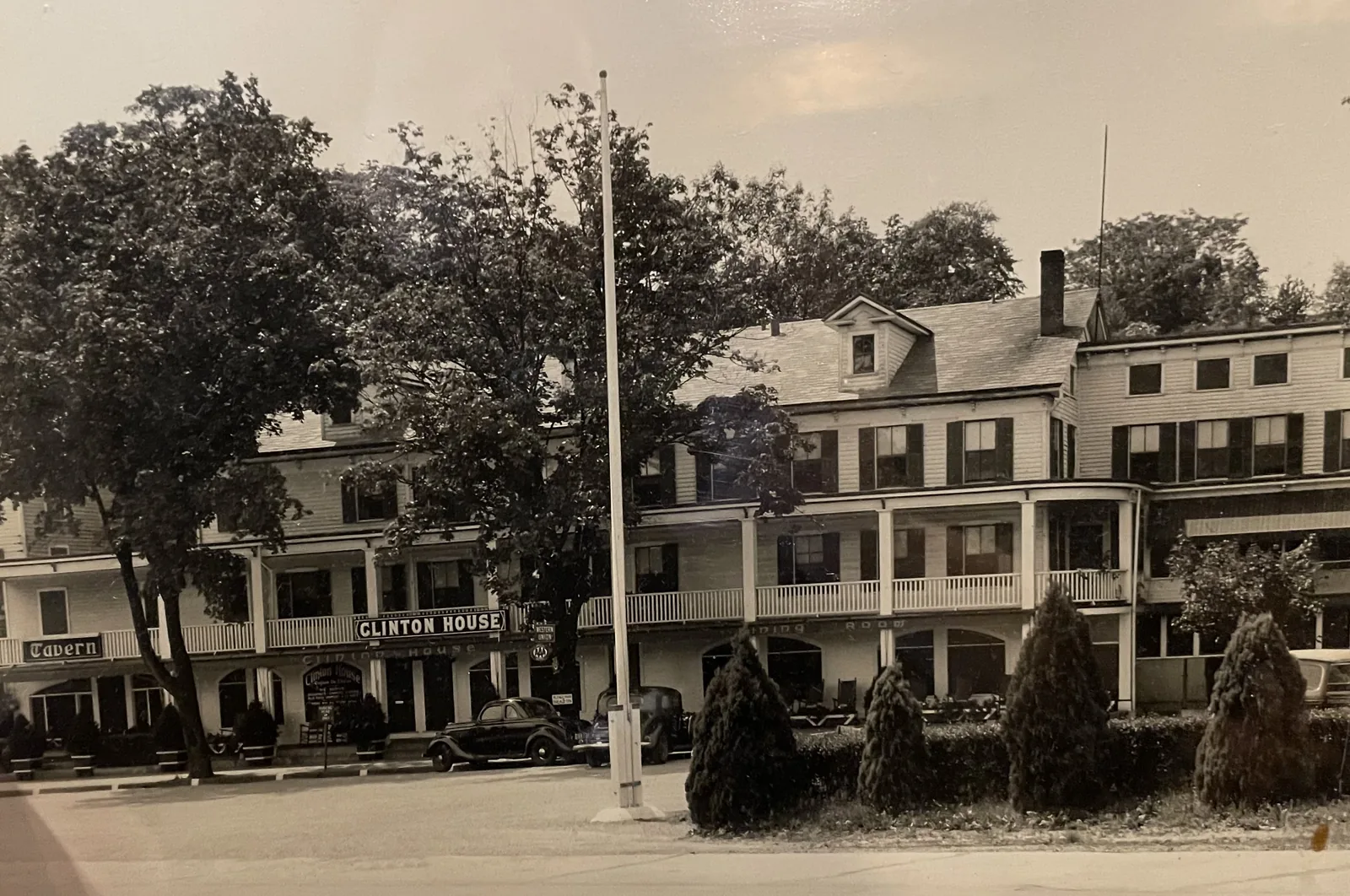
Eugene De Cleene runs the house, and puts the phrase on the postcards. The Tap Room becomes a destination in its own right — dark beams, a long bar, barrels racked along the foot of it. A room card from these years lists a single at $3.50 and a double at $6.00, and gives the telephone number as, simply, 15.
“Eugene De Cleene’s Clinton House — Renowned for Good Food.”Mid-century
From hotel to restaurant.
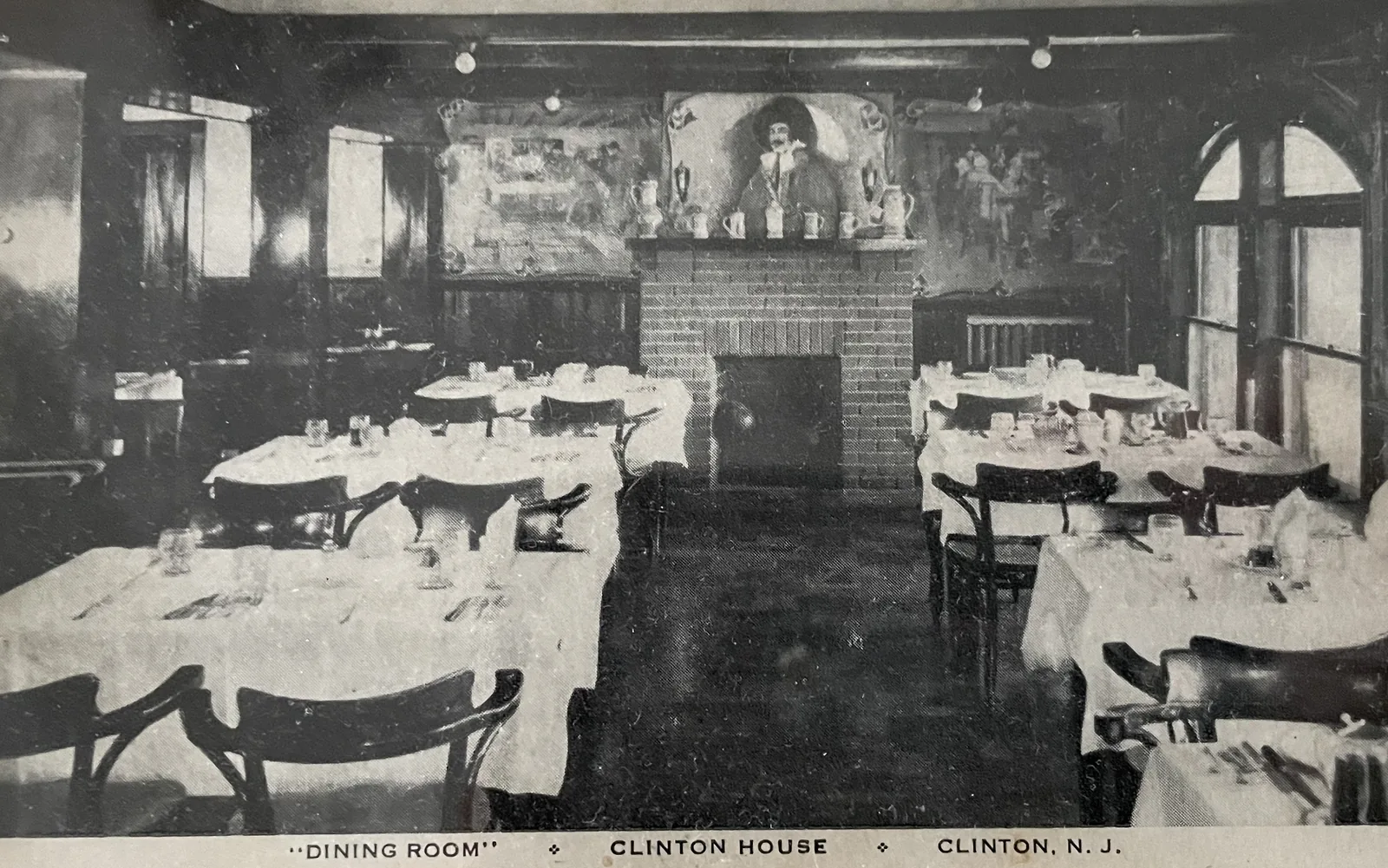
The last overnight guests check out in the 1950s and the rooms upstairs become dining rooms. What had been an inn with a good kitchen becomes a restaurant with a serious one. The bar settles into the identity it still has: American, unhurried, and busy.
A room card from the hotel years. Telephone: 15.1995
A register listing, and a new family.
On 28 September the Clinton Historic District is added to the National Register of Historic Places, and the Clinton House is listed within it as a contributing building. Five weeks later, on 30 October, the Gialias family buys it. They close briefly, renovate, and reopen in early 1996.
Today
A fourth century of hospitality.
Hunterdon County’s most established steak and seafood house, holding the Wine Spectator Award of Excellence every year since 2020, with a sister restaurant — Nektar — across the river in New Hope. The room you sit in tonight is much the same one a stagecoach passenger sat in two hundred years ago. The menu, of course, is a little better.
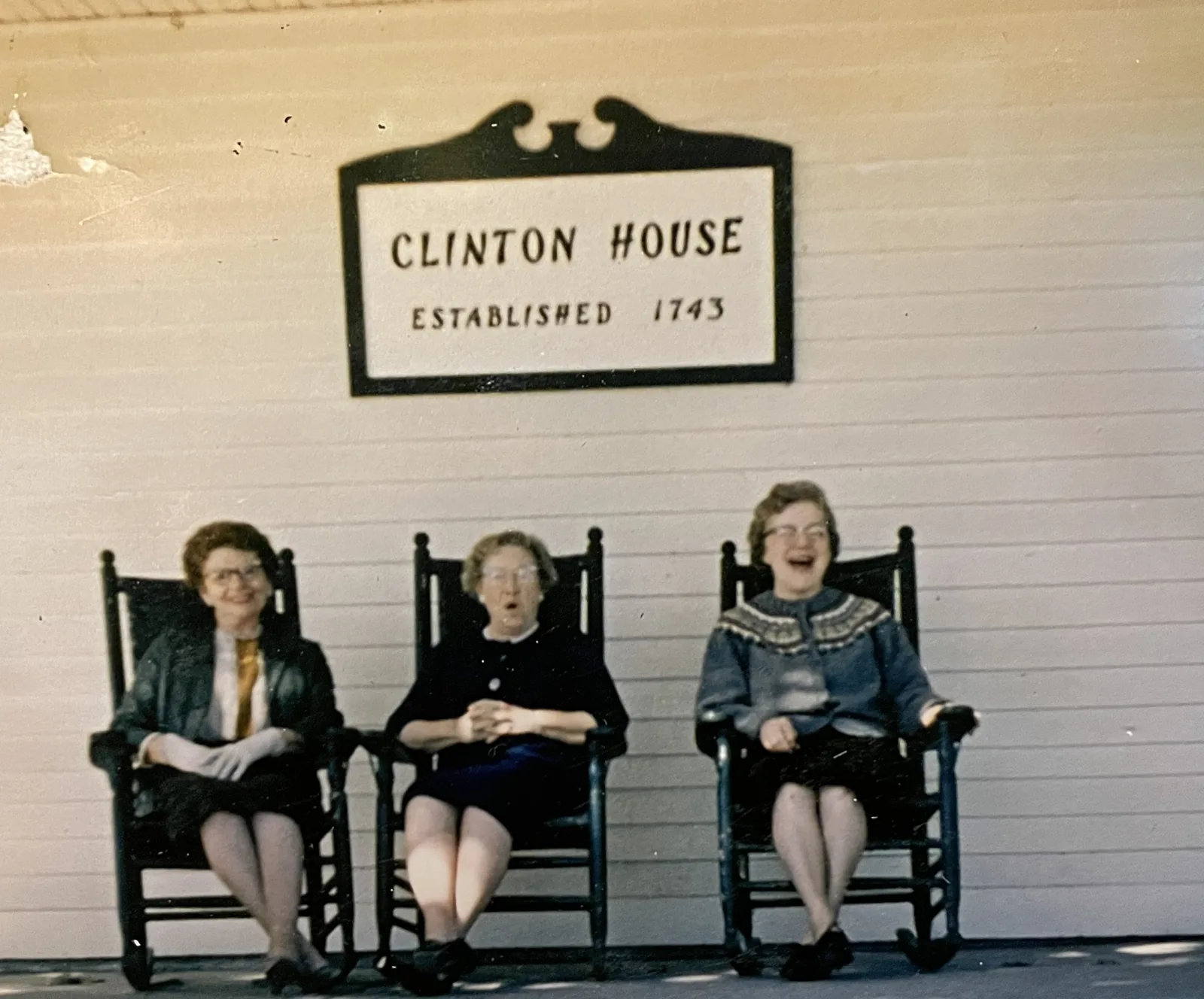
The porch, under the sign that has said 1743 for as long as anyone can remember.
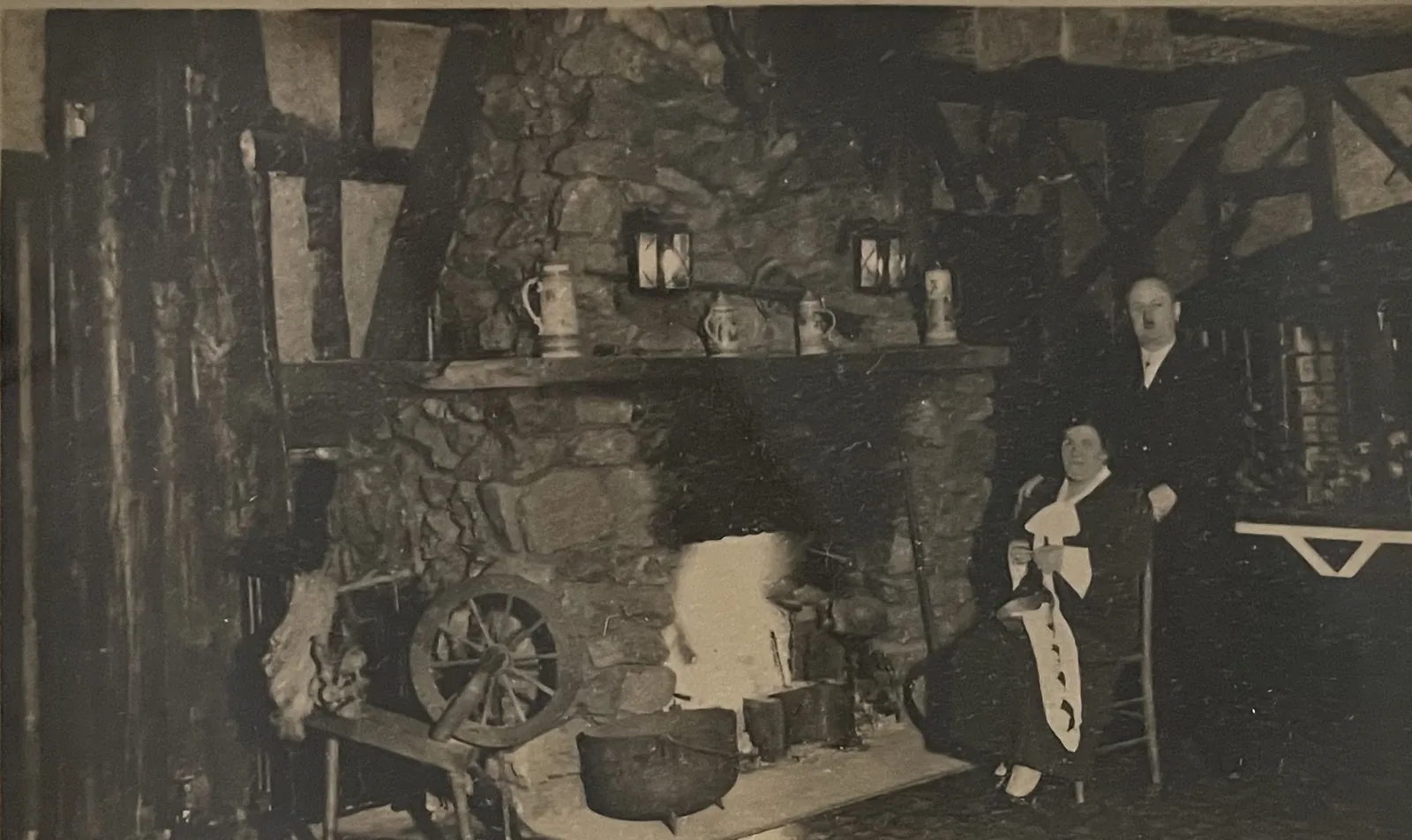
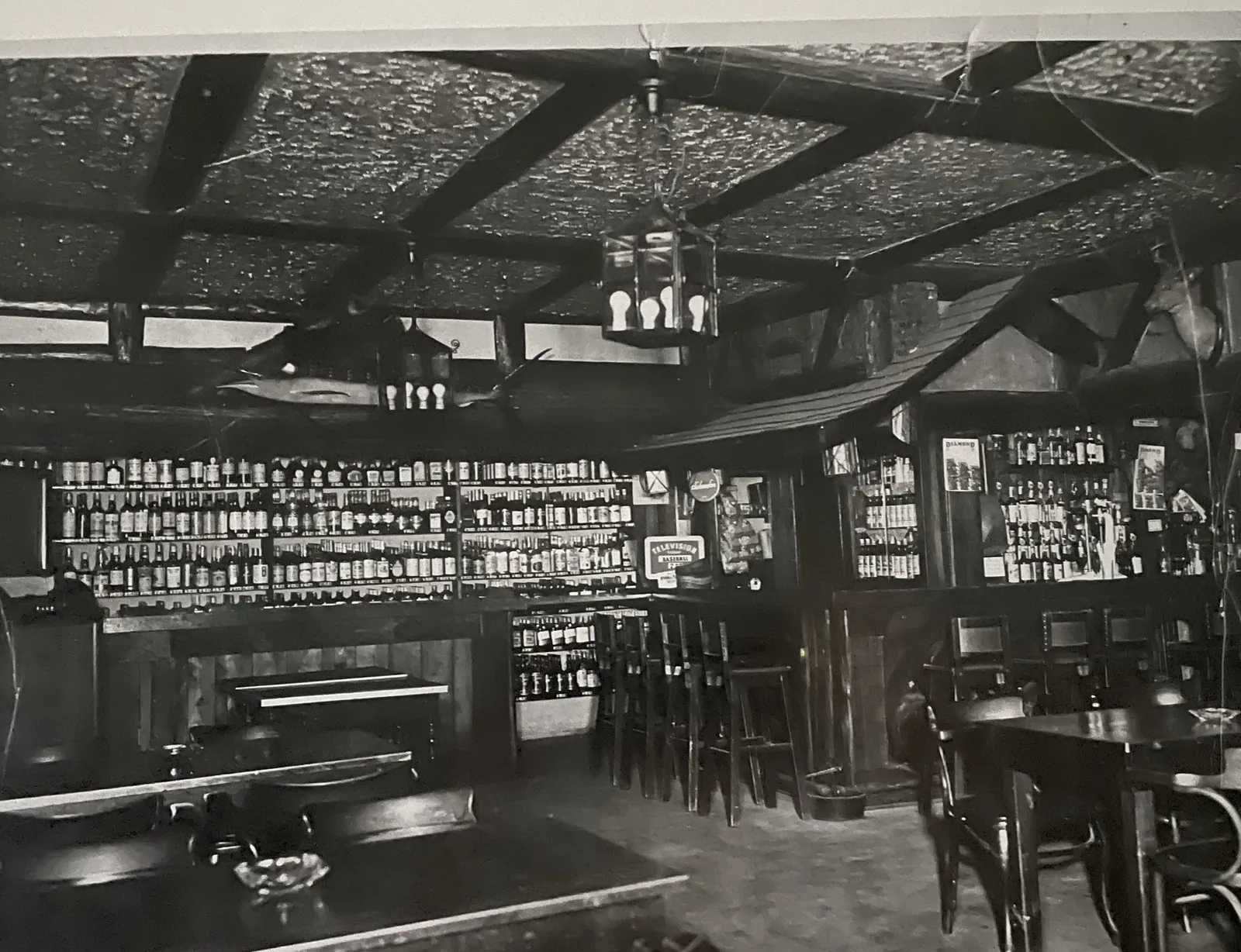
The Tap Room, then
The same room across four decades — and the same painted figure on the wall
behind the bar in more than one of them.
The walk-in hearth.Barrels racked beneath the bar.White jacket, bow tie.The long bar, under its beams.Looking toward the back.“Dining Room — Clinton House.”
From the street
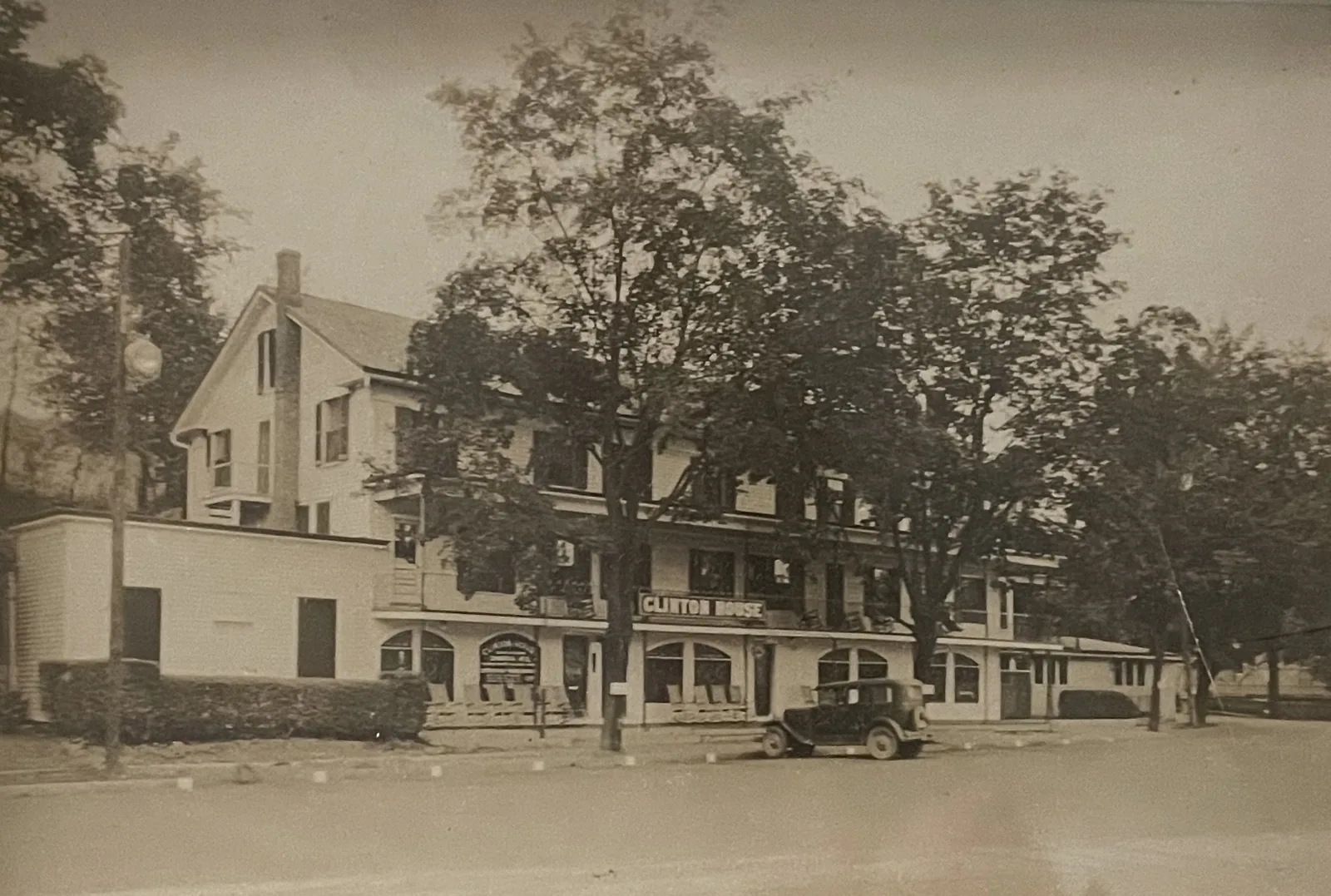
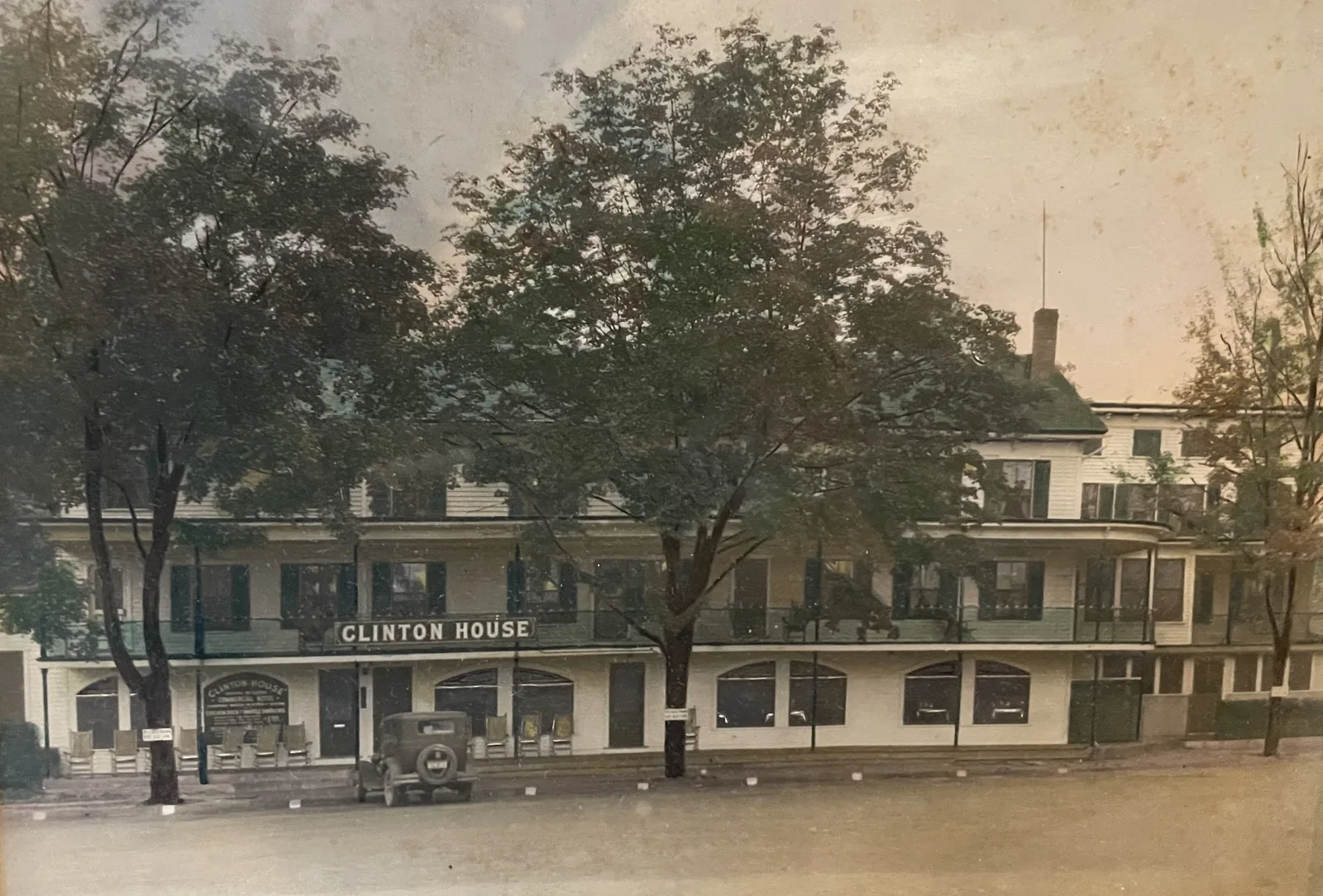
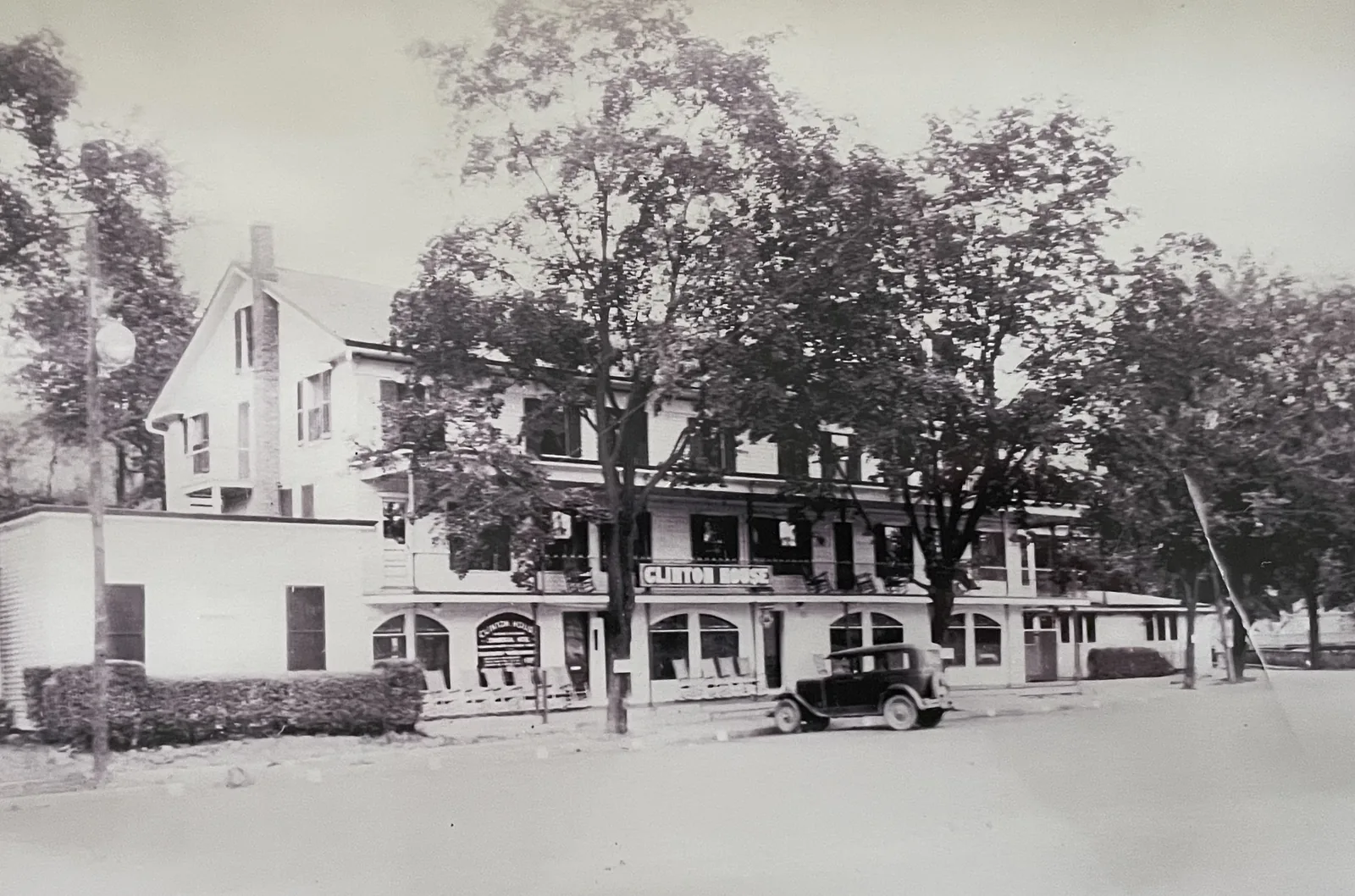
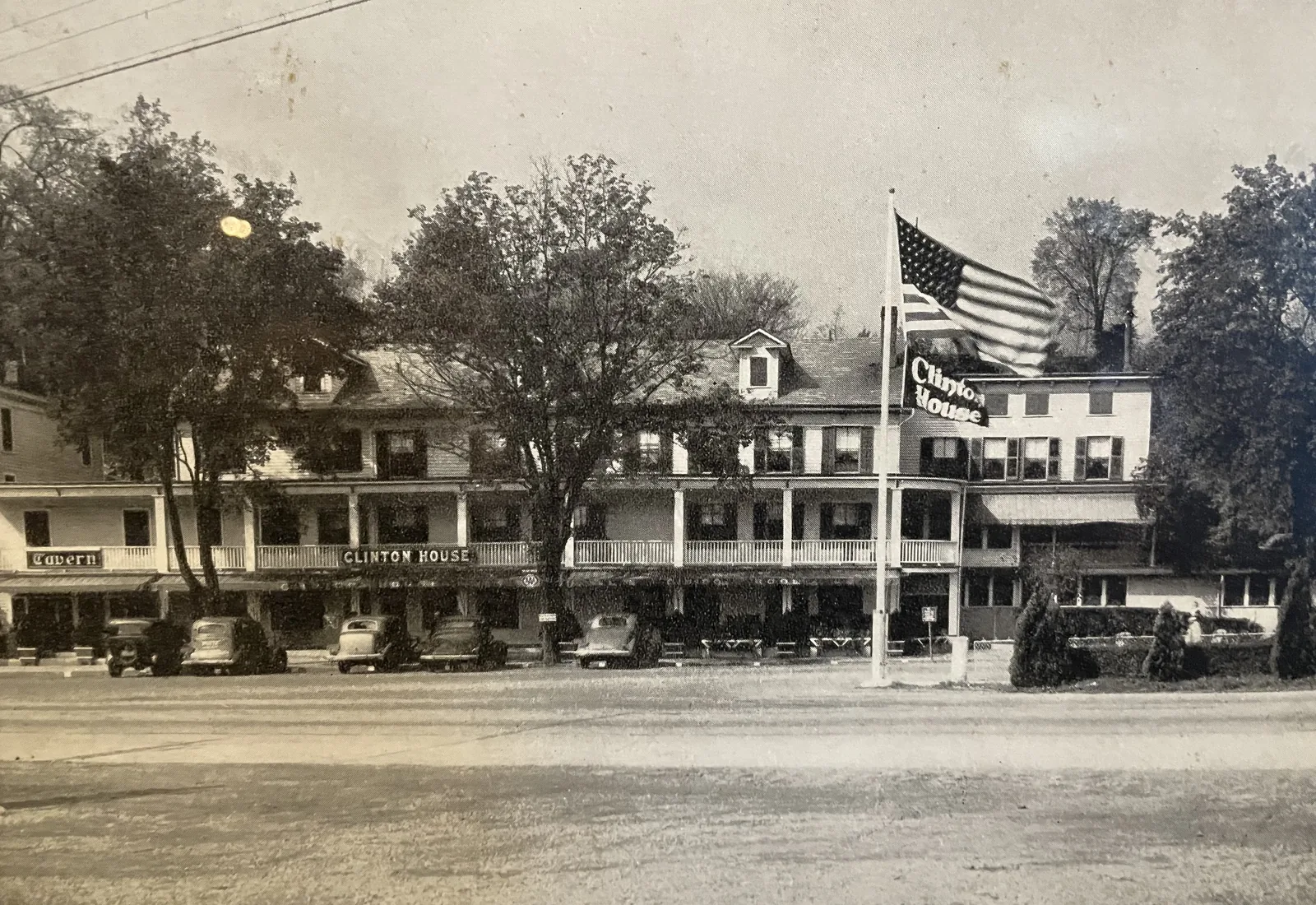
An early motorcar at the door.Under the elms.Hand-tinted.West Main Street, full.At the curb.The flagpole out front.
— From the Gialias family and the team at The Clinton House